Physical Address
Victory Est, Ogombo Ajah, Eti-Osa, Lekki 101245, Lagos
Physical Address
Victory Est, Ogombo Ajah, Eti-Osa, Lekki 101245, Lagos
Nigeria Financial News, Stock Market Data, Economy & Market Analysis
Nigeria Financial News, Stock Market Data, Economy & Market Analysis
Listing on the NGX demands records, a sponsor and SEC approval. Here is the path and what can go wrong.
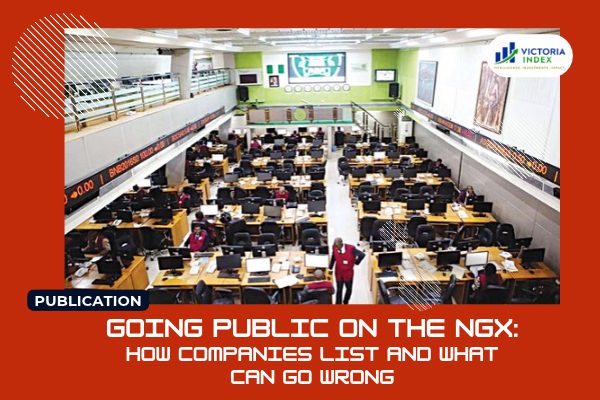
Every few months a Nigerian founder looks at the Nigerian Exchange, sees a fellow business owner ring the closing bell, and wonders whether it is time to do the same. The attraction is obvious. A listing can bring in fresh capital, give early investors a way to exit and put a company’s name in front of thousands of shareholders. What gets less attention is the amount of paperwork, discipline and public scrutiny that comes with it, and the number of ways a listing can fall apart. This guide walks through how a company goes public on the NGX, which board suits which kind of business, and the problems that have caught real companies out recently.
The numbers show how rare it is. The NGX has roughly 150 listed companies, while Nigeria has millions of registered businesses. Government has floated a target of 250 listed companies by 2036 under a proposed Capital Market Master Plan, which would require more than 100 net additions. Equity market value has grown from under N30 trillion in mid-2023 to about N160 trillion, so the appetite from investors is clearly there.
Owners hold back for sensible reasons. Listing means converting to a public limited company, publishing audited accounts every year, selling part of the business and answering to shareholders who can ask uncomfortable questions. Bank loans, private equity and retained earnings do not come with that exposure. A company should list because it has a real use for the money and can live with the transparency, not because the stock market looks fashionable this season.
The NGX has more than one entry point, and picking the wrong one wastes time and money. The figures below come from the exchange’s listing requirements page and its IPO checklist. Both are amended from time to time, so confirm the current version on the NGX listing requirements page before you commit.
| Board | Track record | Minimum market value | Public float | Public shareholders |
|---|---|---|---|---|
| Growth (Entry tier) | 2 years, or a backed new business | N50 million | 10% of each class | At least 21 |
| Growth (Standard tier) | 2 years, or a backed new business | N500 million | 15% of each class | At least 51 |
| Main Board | 3 years | N4 billion (one route) | 20% of each class | At least 300 |
| Premium Board | Main Board rules plus a 70% governance score | N200 billion | 20% of shares or N40 billion in value | Main Board rules apply |
The Growth Board suits younger or smaller firms, including startups that cannot yet show years of large profits. The Main Board is the home of established mid-sized companies. On the Main Board, promoters and directors must also keep at least 50% of their shares for 12 months after listing, and companies pick from three standards. One is profit based, for example N300 million of cumulative pre-tax profit over three years, while another leans on size, such as a market value of at least N4 billion at listing. The Premium Board is for large, well-governed companies and requires a score of at least 70% on the exchange’s Corporate Governance Rating System.
Get the company into shape. A private limited company must first convert to a plc, with no restrictions on transferring fully paid shares. The books need three years of audited accounts for the Main Board, and the most recent set cannot be more than nine months old when you apply. Many companies find their records are not clean enough at this stage.
Assemble the advisory team. The NGX process runs through a sponsoring dealing member, which is a stockbroking firm that completes the listing checklist and signs a declaration that proper due diligence was done on the company and its directors. Around that firm sit an issuing house, reporting accountants, solicitors, a registrar and receiving agents. The company must also nominate three primary market makers to support trading after the listing.
Prepare the offer documents. These include the prospectus, a pricing memorandum, board and shareholder resolutions approving the offer, a list of any litigation with a solicitor’s opinion, and a breakdown of the estimated cost of the issue. If a technical partner or core investor fills a gap in your track record, that agreement goes in too.
Win regulatory approval. The Securities and Exchange Commission must approve the offer, and the SEC Nigeria rules also govern how the financial statements are presented. Certified incorporation documents from the Corporate Affairs Commission must be recent, no more than two months old at application. Banks, insurers and telecoms also need a no-objection letter from their own regulator, such as the CBN, NAICOM or the NCC.
Apply to the exchange. The sponsor submits hard and soft copies, and the gap between the two must not exceed 24 hours. The NGX will not conclude on an application until every document is in. The full list is on the exchange’s Premium Board IPO checklist, which is a useful reference even for companies aiming at other boards.
Run the offer and list. Investors subscribe through receiving agents. The size and float tests are measured at the completion of the offer, shares must be fully paid at allotment, and investors need accounts with the Central Securities Clearing System to hold them. Our guide to how CSCS works explains what that means for the people who buy.
Live with the obligations. After listing come regular financial filings, disclosure of material events and annual fees tied to market value. This is where many problems start, as the next section shows.
The offer can simply fail. In February 2026, Ellah Lakes Plc announced that its N235 billion offer had not reached the minimum subscription threshold. No shares were allotted and subscription money was refunded. The market reacted badly. The stock fell 7.9% on the day of the announcement and a further 9.8% on the next trading day, wiping about N4.8 billion off the company’s market value in a single session. Pricing and timing matter as much as the paperwork.
Costs and delays can outrun the plan. Fees for advisers, auditors, lawyers and regulators add up before a single share is sold, and documents expire. A listing that drifts can force a company to refresh its paperwork and pay again.
Compliance failures can lead to the exit door. Listing is not the finish line. In March 2026 the NGX’s compliance report placed five companies on its delisting watch list, including Deap Capital Management and Trust, Union Dicon Salt and Multi-Trex Integrated Foods, over issues such as missed filings. Some were put on monitoring periods of two or three years. In 2025, eight companies left the exchange, among them Notore Chemical Industries and MRS Oil Nigeria, which left voluntarily, and others that the exchange removed for operating below listing standards. MRS Oil moved to the NASD over-the-counter market, citing the need for more flexibility and reduced compliance costs. Shareholders of delisted companies often find it far harder to sell their shares afterwards.
Owners lose some control. Selling 20% or more of the company to the public, accepting scrutiny of board decisions and agreeing to hold shares through a lock-up are real trade-offs. The market may not value you as hoped. A company can meet every rule and still list into a weak market, with poor trading volumes and a share price below what the founders expected. Thin liquidity makes shares hard to sell, which hurts the very investors the company wanted to attract.
If you buy into an IPO, you are trusting the prospectus, so read it. Check how the money will be used, who the sponsors are, what the track record shows and how much the owners are selling. Our guide to analysing an NGX earnings report shows what to look for in the numbers, and the explainer on market capitalisation and free float covers why float affects how easily you can trade. Brokers should be registered, so see our walkthrough on opening a stockbroking account in Nigeria, and treat any offer that is not approved by the SEC as a warning sign, as our piece on investment scams and Ponzi schemes explains. To see how listed companies are performing in the current reporting season, read our ranking of Nigeria’s biggest banks by nine-month pre-tax profit and our report on companies that swung from loss to profit in 9M 2026.
Going public on the NGX is achievable for companies that prepare early, choose the right board, keep clean audited accounts and accept life under public scrutiny. It is a poor fit for businesses that want quick cash without the discipline. Founders should speak to a licensed sponsor and a securities lawyer early, and investors should read the prospectus before they commit a naira.
Disclaimer: This article is for information only and is not legal, financial or investment advice. Listing rules, fees and thresholds are amended from time to time, and figures come from the NGX, company announcements and published reports at the time of writing. Please verify with the NGX and the SEC and read our financial disclaimer before making any decision.