Physical Address
Victory Est, Ogombo Ajah, Eti-Osa, Lekki 101245, Lagos
Physical Address
Victory Est, Ogombo Ajah, Eti-Osa, Lekki 101245, Lagos
Nigeria Financial News, Stock Market Data, Economy & Market Analysis
Nigeria Financial News, Stock Market Data, Economy & Market Analysis
Zenith, First HoldCo and GTCO top Nigeria's banks on nine-month 2026 pre-tax profit, yet the ranking hides rising tax pressure.
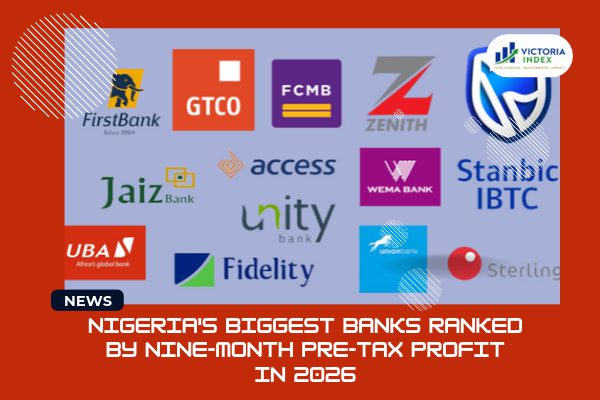
Nine months into 2026, the Nigerian banking scoreboard has been reshuffled. Zenith Bank finished the period with the biggest pre-tax profit at N928.8 billion, yet First HoldCo trails by just N17.6 billion after a jump of more than 60%, and GTCO sits close behind. Further down, Access Holdings and Stanbic IBTC are posting gains of their own. If you only glance at a ranking table, you can easily miss the story underneath it. This article lays out the order, explains how each bank got there, and points out what the numbers do not tell you.
We ranked lenders by group profit before tax for the nine months ended September 30, 2026, using the unaudited statements filed on the Nigerian Exchange and the investor pages of the banks, such as Zenith Bank’s. Pre-tax profit is a cleaner yardstick than profit after tax because tax charges swing with one-off adjustments, levies and the countries where each group operates. It shows what the business earned before the taxman took a share.
Two limits apply. United Bank for Africa and Fidelity Bank had not published their nine-month numbers at the time of writing, and UBA has said its board signed off the accounts while Central Bank of Nigeria approval was still pending. We left both out rather than guess. We also excluded Ecobank Transnational, which trades on the NGX but is run from Lome and is not a Nigerian bank in the usual sense. All figures are in naira and may be revised once audited.
| Rank | Bank | 9M 2026 pre-tax profit | Change on 9M 2025 |
|---|---|---|---|
| 1 | Zenith Bank | N928.80 billion | Up 1.2% |
| 2 | First HoldCo | N911.24 billion | Up 60.8% |
| 3 | GTCO | N879.90 billion | Down 2.3% |
| 4 | Access Holdings | N667.36 billion | Up 8.3% |
| 5 | Stanbic IBTC | N531.88 billion | Up 35.1% |
Together, the top four reported N3.39 trillion, about 12.9% more than the roughly N3 trillion of a year earlier. Growth was uneven, though, and one bank did most of the heavy lifting.
Zenith earned N928.8 billion before tax, up only 1.2% from N917.4 billion. That is the slowest growth among the leaders, and the reason is simple. Its loan-loss charges dropped by about N552 billion compared with last year, which did most of the work. When a bank sets aside far less for bad loans, profit rises even if the core business stands still.
The tax line tells the other half. Zenith’s income tax expense climbed 65% to N253 billion, which left profit after tax at N675.8 billion, an 11.6% drop from N764.2 billion. Its loan book did grow 11.4% to N11.64 trillion, so lending itself looks healthy. For more on how the bank’s year began, read our breakdown of Zenith Bank’s H1 2026 pre-tax profit.
First HoldCo posted N911.24 billion, a 60.84% rise from N566.54 billion. It is the biggest percentage gain among the large banks and it puts the group within touching distance of Zenith. Profit after tax rose 65% to N744.45 billion, the largest after-tax figure among the eight banks that had reported. The market noticed. The share price gained 10% on the Friday after the release and closed that week at N144.10.
Be careful with the growth rate, though. Last year’s base was weakened by write-offs, so part of the jump is recovery and not new strength. Interest income fell 8.7% to N2.09 trillion and net interest income dropped about 16%. What filled the gap was fees and trading, with non-interest income growing by more than 143%. International operations supplied 82.2% of pre-tax profit, which means the group’s result leans heavily on businesses outside Nigeria. Its effective tax rate also eased to 18.3%, which helped the bottom line.
GTCO reported N879.9 billion, down 2.3% from N900.8 billion. It is the only one of the top four to slip, and a N87.9 billion fair value loss weighed on the result. You can see the details in our report on GTCO’s nine-month pre-tax profit. A small dip at this scale still leaves the group about N49 billion behind the leader, so the gap at the top is thin and could close or widen with a single quarter.
Access Holdings came fourth at N667.36 billion, up 8.3% from N616.25 billion, and profit after tax rose 5.9% to N474.17 billion. Lower impairment charges supported the result. In one published analysis of eight listed banking groups, Zenith and Access together accounted for roughly N809 billion of the N906 billion fall in impairment charges. That is a lot of profit riding on a single line item, and it is not a lever any bank can pull every year.
Stanbic IBTC recorded N531.88 billion, up 35.05% from N393.84 billion, with profit after tax at N370.36 billion, a 33% rise. It is smaller than the four above, yet it is growing at a pace most of them cannot match, and its shares are up about 60% since January, reaching N160 on October 23. Part of its earnings comes from non-banking units such as pensions and asset management, so it is not a pure lender like some peers.
UBA’s comparison point is its nine-month 2025 pre-tax profit of N578.6 billion. If the 2026 figure lands somewhere near that, it would sit fifth, just ahead of Stanbic IBTC. That is only an illustration and not a forecast, and we will not pretend to know the answer. Once the Central Bank clears the numbers and both lenders publish, we will update this ranking so readers are not left with an incomplete table.
Three forces explain most of this table. The first is cheaper loan-loss provisions. The second is a shift from interest income to fees and trading. The third is taxes and costs growing faster than profit. Across the eight groups in one published analysis, combined pre-tax profit rose 14.2% to N5.29 trillion even as net interest income declined, while operating expenses climbed 6.4% to N5.39 trillion. A bank can cut provisions once, but it cannot do it forever.
Interest rates add another layer. The Central Bank cut its benchmark rate by 350 basis points to 23% on September 22, 2026. Cheaper money helps borrowers, yet it narrows what banks earn on loans and securities, so the fourth quarter will show how well lenders protect their margins. Policy decisions are published on the CBN website, and our guide on how CBN policies affect your money and investments explains the practical side.
Tax is the quiet pressure point. A wider look at 41 NGX-listed companies found that income tax expense rose 71% over the nine months while their combined pre-tax profit grew 36%. Zenith is a clear example of that gap. For a broader view of this reporting season, see which Nigerian companies swung from loss to profit in 9M 2026.
A pre-tax ranking is a starting point and not a buying guide. Before putting money into any of these shares, compare profit after tax, dividend history and capital strength, because a bank can lead the table and still reward shareholders less than a smaller rival. Our guide to the best banking stocks to buy during Nigeria’s recapitalisation era walks through that thinking, and our explainer on how NGX dividends work covers yield, payout ratio and qualification dates. If you are just starting out, building a diversified NGX portfolio on a modest budget is a sensible first read, and our list of top Nigerian stocks to watch in 2026 gives wider context.
For depositors, size is only part of safety. Regulation and supervision matter more, so keep an eye on Central Bank announcements. And before using any broker or investment platform to buy bank shares, confirm that it is registered with the Securities and Exchange Commission.
On nine-month pre-tax profit, Zenith leads, First HoldCo is the story of the year, and GTCO stays in the fight despite a small decline. Access and Stanbic IBTC fill out the list with different kinds of momentum. The real lesson is that headline profit and quality of profit are not the same thing. Lower provisions, trading gains and international earnings carried much of this year’s result, and those are not guaranteed to repeat. Read the ranking, then read the notes behind it.
Disclaimer: This article is for information only and is not investment advice. Figures come from the banks’ unaudited statements and published analyses of them, and may be revised. Please verify with official filings and read our financial disclaimer before making any financial decision.